Running Shoe Lifespan CalculatorHow Long Do Running Shoes Last?
Most running shoes last 300–500 miles (500–800 km). Carbon race shoes often lose their bounce after 120–250 miles (200–400 km), while trail shoes usually last 310–430 miles (500–700 km). Your body weight and running surface move your pair toward either end of that range.
Estimate how many miles your own running shoes can last based on shoe type, weight and terrain. Last updated .
Result will appear after pressing Calculate.
Discover Best
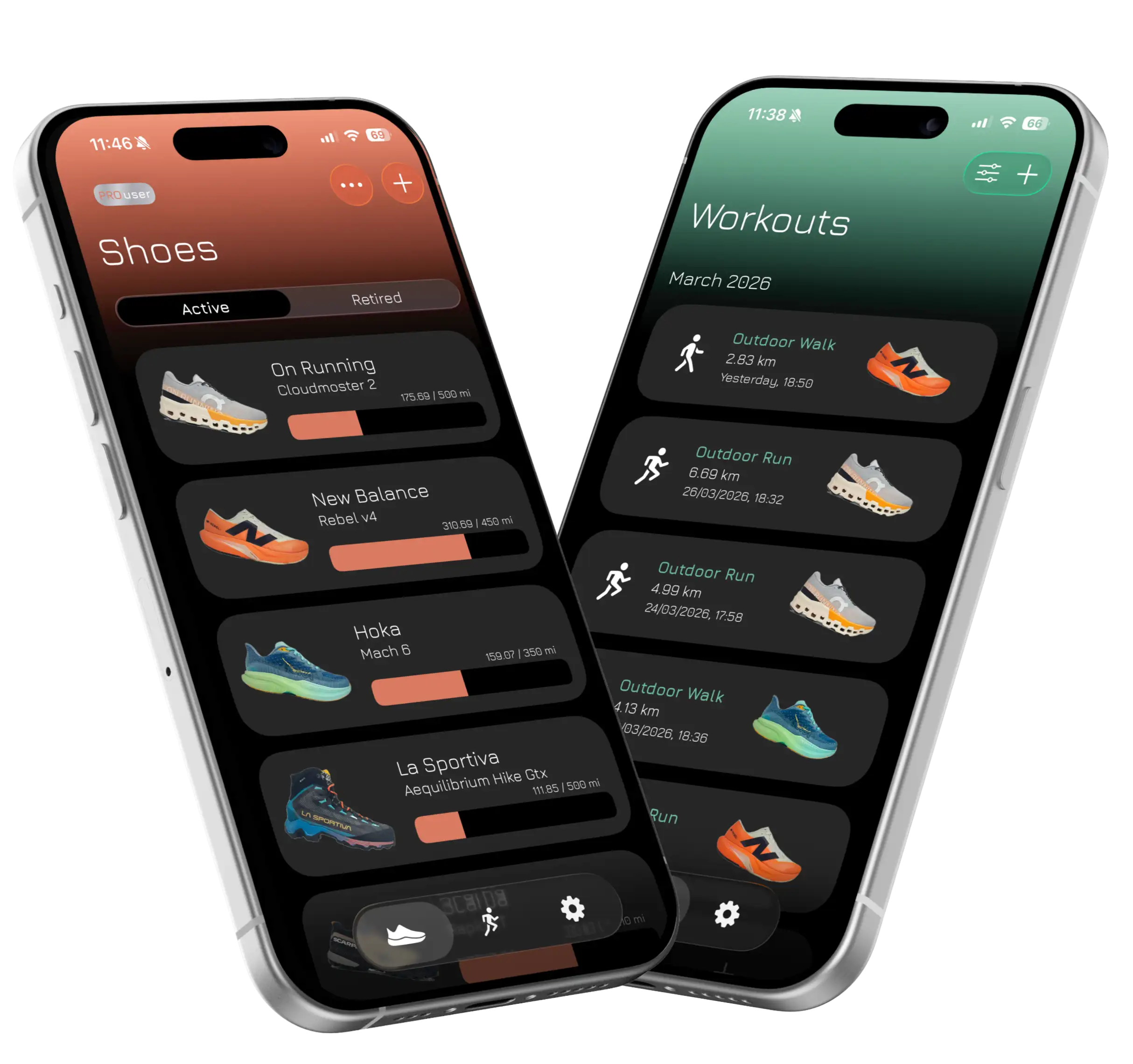
Shoe Tracker
Running shoe health
Understanding Running Shoe Durability: When to Replace Your Pair?
Finding the right time to retire your running shoes is crucial for preventing injuries like shin splints or plantar fasciitis. While the general rule of thumb is to replace them every 300 to 500 miles (500–800 km), several personal factors can significantly shift this window. The calculator narrows it down to your own "retirement zone."
How the Calculator Works
The calculator starts with a typical lifespan for your shoe type: 600–800 km (370–500 miles) for a daily trainer, 400–600 km (250–370 miles) for a tempo shoe, 200–400 km (120–250 miles) for a carbon race shoe and 500–700 km (310–430 miles) for a trail shoe. It then adjusts that range for body weight (+10% under 65 kg, no change at 65–80 kg, −10% at 80–95 kg and −20% above 95 kg) and for surface (−10% for mostly road, no change for mixed surfaces and +5% for trail). The result is an estimate, not a guarantee: replace your shoes sooner if you notice the warning signs below.
Key Factors That Affect Shoe Longevity
1
Shoe Type & Technology
Modern carbon fiber racing shoes (like the Nike Vaporfly or Adidas Adios Pro) are engineered for peak performance, not durability. Their ultra-lightweight foam often loses its energy return properties after just 120–250 miles. In contrast, daily trainers are built with denser foams designed to withstand hundreds of miles of repetitive impact.
2
Runner's Body Weight
Physics plays a major role in midsole compression. A heavier runner (e.g., 95kg+ / 209lbs+) exerts more force on the cushioning with every strike, causing the foam cells to collapse faster over time compared to a lighter runner using the same model.
3
Running Surface & Terrain
Asphalt and concrete are unforgiving. These hard surfaces accelerate the wear of the rubber outsole and the breakdown of the cushioning. If you do most of your mileage on soft trails or synthetic tracks, your shoes will likely stay "responsive" for a longer period.
Signs It's Time for a New Pair
Even if your mileage is low, watch out for these "red flags":
⚡
Reduced shock absorption
You feel the impact more in your knees and hips than you used to.
⇄
Uneven sole wear
If the tread is gone or the foam looks heavily creased (compressed), the shoe's stability is compromised.
✕
New aches
Unexplained foot pain after a routine run is often the first sign of "dead" foam.
Estimated Lifespan Comparison Table
Typical ranges by category—your personal window may differ based on the factors above.
Comparison of typical running shoe lifespan by shoe category in miles and kilometers