
How Many Miles Do Running Shoes Last? By Shoe Type
Most running shoes last 300–500 miles (500–800 km). See how long daily trainers, race shoes and trail shoes last, and the signs a pair is done.
By Maciej KrólikowskiPublished 10 min read
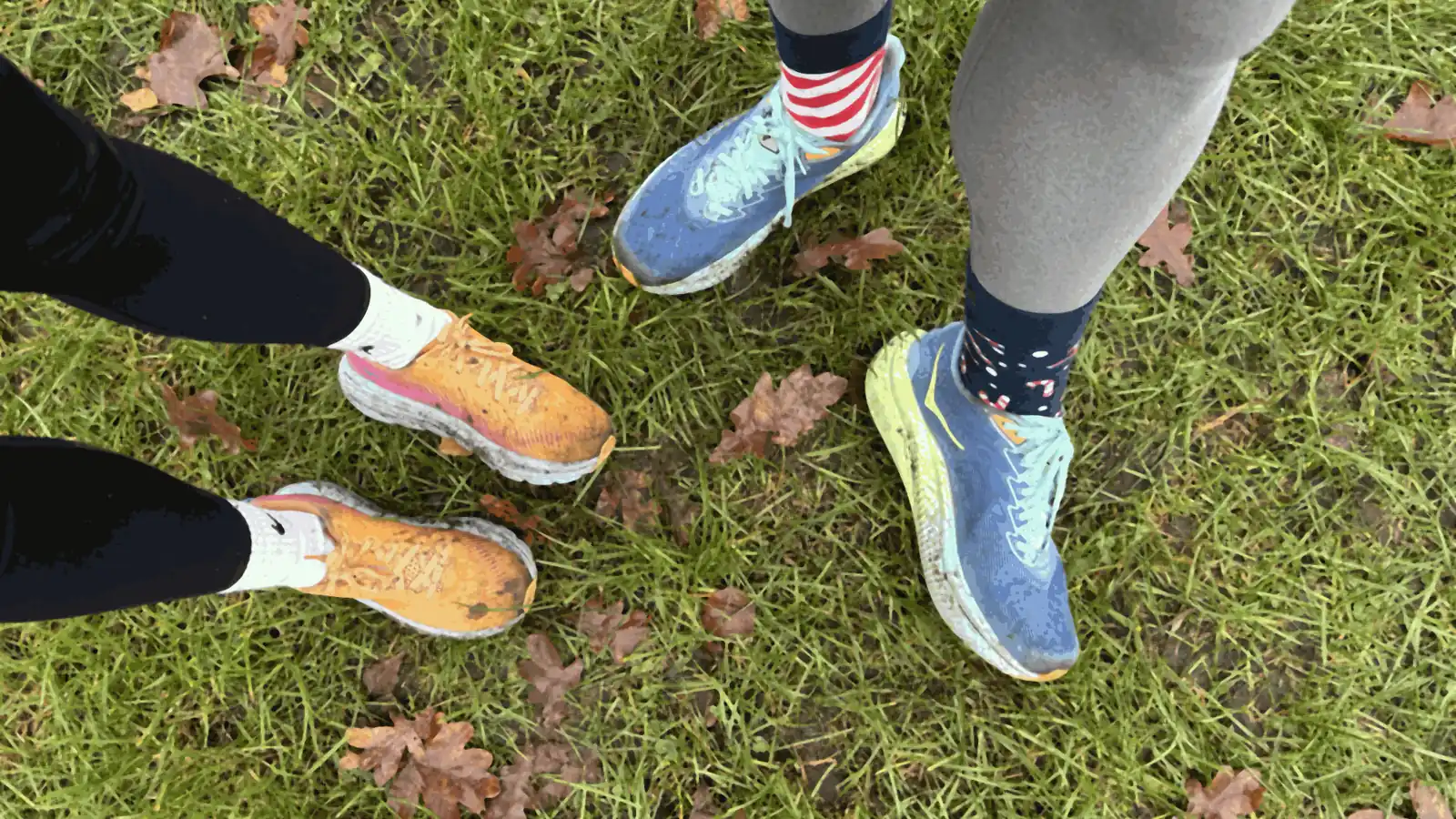
Most running shoes last 300 to 500 miles (500 to 800 km). That is the short answer, and for a typical daily trainer it holds up. But it hides a big spread: a carbon race shoe can lose its bounce after 120 miles (200 km), while a light runner in a trail shoe on soft ground can go well past 500 miles (800 km).
The type of shoe sets the starting range. Your body weight and the surface you run on move you toward one end of it. And the miles themselves matter less than what they do to the foam, which is something you mostly cannot see.
This guide gives the ranges for each type of shoe, explains what the research says about worn midsoles, and shows how to turn a mileage number into a date on the calendar.
How long each type of running shoe lasts
| Shoe type | Expected lifespan | Why |
|---|---|---|
| Daily trainer | 370–500 miles (600–800 km) | Denser foam and more rubber, built to absorb volume |
| Tempo shoe | 250–370 miles (400–600 km) | Lighter, livelier foam and thinner outsole |
| Carbon race shoe | 120–250 miles (200–400 km) | Soft, low-density foam tuned for energy return, not durability |
| Trail shoe | 310–430 miles (500–700 km) | Tough uppers and lugs; softer ground spares the midsole |
These are the base ranges our running shoe lifespan calculator starts from. They come from manufacturer guidance and the pairs we track in SHOOZ, not from a single laboratory study, so treat them as a planning range rather than a hard limit.
Daily trainers are the workhorses. They usually carry the most rubber and the most forgiving foam, and they are the shoes for which the familiar "300 to 500 miles" rule was made.
Tempo shoes trade some of that durability for weight. Thinner rubber and bouncier foam mean the outsole and the ride both fade earlier.
Carbon race shoes are the exception that catches people out. The upper and plate often look fine long after the foam has lost what made the shoe fast. Treat 120 to 250 miles (200 to 400 km) as the useful racing window, then move the pair to training if you still like the fit.
Trail shoes are harder to call. Soft ground is kind to the midsole, but rocks chew through lugs, and the upper often gives out before the foam does.
What happens to a running shoe as it wears out
The miles are only a proxy. What actually wears out is the midsole foam: millions of small gas-filled cells that compress on every landing and slowly stop springing back.
Three studies show how that plays out:
- The cushioning goes early. In a 1985 study in the American Journal of Sports Medicine, shoes run on by a machine kept about 75% of their shock absorption after 50 miles and around 67% after 100 to 150 miles. Shoes worn by runners in normal training held up better, at roughly 70% after 500 miles.
- Pressure under the heel rises a lot. Researchers who followed EVA midsoles through real running found that peak pressure under the foot roughly doubled after 500 km (about 310 miles). Under a microscope, the foam showed structural damage, wrinkled cell walls and holes, after 750 km (about 470 miles).
- You adapt instead of noticing. When 24 runners put 200 miles (320 km) on the same pair, the forces measured at landing barely changed. The runners had changed instead: longer ground contact and different ankle and torso angles. The body quietly compensates for a tired shoe, which is exactly why "it still feels fine" is a weak test.
The last point is the reason a mileage number is useful at all. By the time a worn shoe feels obviously worse, you have usually been running in it for weeks.
Do super shoes wear out faster?
In one important way, yes. A 2024 study in the Scandinavian Journal of Medicine & Science in Sports tested 22 trained runners in carbon-plated shoes with two different foams, both new and after 450 km (280 miles) of use.
When new, the shoes with PEBA foam, the soft, bouncy material in most of today's race shoes, were clearly more economical than the EVA version. After 450 km the PEBA pair cost the runners noticeably more energy than when new, while the EVA pair had barely changed. At that point the two shoes performed about the same.
So the race shoe does not fall apart at 280 miles. It just stops being the faster shoe, which is the whole reason you bought it. If a pair costs you a race-day advantage, count its useful life in the low hundreds of miles and save it for workouts and races.
What makes your shoes last longer or shorter
The shoe type sets the range. Two personal factors decide where in it you land:
| Factor | Effect on lifespan |
|---|---|
| Body weight under 143 lbs (65 kg) | About +10% |
| Body weight 143–176 lbs (65–80 kg) | Baseline |
| Body weight 176–209 lbs (80–95 kg) | About −10% |
| Body weight over 209 lbs (95 kg) | About −20% |
| Mostly asphalt or concrete | About −10% |
| Mixed surfaces | Baseline |
| Mostly soft trail | About +5% for the midsole, though rocks wear the outsole faster |
The effects stack, and the gap gets bigger than people expect. Take the same daily trainer in two situations:
- A 132 lb (60 kg) runner on mixed surfaces: about 410–545 miles (660–880 km).
- A 220 lb (100 kg) runner almost entirely on pavement: about 270–360 miles (430–575 km).
That is close to 200 miles (300 km) of difference in the same model. The calculator works this out for your own weight, surface and shoe type in a few seconds.
Other things matter too, but they are harder to put a number on. Runners who land on the heel usually wear through the outer edge of the heel first. And a shoe that also does your commute and dog walks is collecting miles that a running app never sees.
How I use these numbers with my own shoes
My daily trainer is a Hoka Mach 7. I weigh a little over 165 lbs (75 kg) and most of my runs are on asphalt. For that combination the calculator gives roughly 335 to 450 miles (540 to 720 km), so that is the window I set for the pair in SHOOZ.
I run in three pairs: a daily trainer, a lighter shoe for workouts and a race pair. The daily trainer takes every easy run, so it reaches its window long before the other two. That makes it the pair I replace first, every time.
The number does not decide on its own. It tells me when to start looking. Once the pair passes the lower end of its window, I go through the checks further down this page and run my usual easy route in a newer pair as well. If the difference is obvious, the old pair is done, even when the outsole still looks fine.
How many months is that?
Mileage is easier to plan with once you turn it into time. Here is how long a shoe with a 400-mile (640 km) life lasts at different weekly volumes:
| Weekly mileage | One pair lasts about |
|---|---|
| 10 miles (16 km) | 9 months |
| 20 miles (32 km) | 5 months |
| 30 miles (48 km) | 3 months |
| 40 miles (64 km) | 10 weeks |
This is also the quiet case for a shoe rotation. Split 20 miles a week across two pairs and each one lasts about nine months instead of five, so you do not buy fewer shoes, but you replace them in a calmer rhythm. A 22-week study of 264 runners also found that runners who used more than one pair in parallel had a lower injury risk, about 39% lower. The authors linked that to varying the load on the body rather than to the shoes themselves.
Signs your running shoes are worn out
A mileage number tells you when to start paying attention. These checks tell you whether the pair is actually done:
- The outsole is smooth or bald where you land, or the midsole foam shows through the rubber.
- The midsole has deep horizontal creases along the sides, especially under the heel, that stay there when the shoe is off your foot.
- The heel leans when the shoe stands on a table. Look at it from behind: a midsole compressed more on one side tilts the whole shoe.
- Pressing into the midsole with your thumb feels firm compared with a newer pair of the same model.
- Familiar aches come back on easy runs and go away when you switch to a different pair.
The last check is the most reliable, and it needs a comparison. If you keep a newer pair in the rotation, run the same easy loop in both. The difference between them tells you more than any single number.
How to make running shoes last longer
You cannot stop the foam from ageing, but you can avoid wasting it:
- Rotate two or more pairs. Each pair covers fewer miles per week, and you always have a fresher shoe to compare against.
- Keep running shoes for running. Walking, gym sessions and commuting all add wear that shortens the running life of the pair.
- Unlace before taking them off. Kicking shoes off by the heel breaks down the heel counter, the stiff cup that holds your foot in place.
- Dry them slowly. Stuff wet shoes with newspaper and leave them at room temperature. Shoe brands generally advise against drying them on a radiator or in a dryer, because direct heat can weaken the glue.
- Match the shoe to the session. Save the race shoe for workouts and races, and let the daily trainer take the easy miles it was built for.
Frequently asked questions
Can running shoes last 1,000 miles?
Some can stay in one piece for that long, especially durable daily trainers worn by light runners. Very few still cushion the way they did when new. If a pair is past 600 miles (about 1,000 km), check it carefully and compare it with a newer pair before your next long run.
Do expensive running shoes last longer?
Not necessarily. A higher price often buys lighter, bouncier foam, and the PEBA study above shows that this kind of foam can lose its advantage faster. A mid-priced daily trainer with plenty of rubber often outlasts a premium race shoe by a wide margin.
Is it bad to run in worn-out running shoes?
There is no simple mileage at which a shoe becomes harmful. What the research does show is that worn foam cushions less and that runners change how they move to make up for it, usually without noticing. If old aches return on easy runs and fade in a newer pair, take that as the signal.
Do heavier runners need to replace shoes sooner?
Usually, yes. More weight means more load on the midsole with every step. The calculator takes about 10% off the range for runners between 176 and 209 lbs (80 and 95 kg), and about 20% above that.
So when should you replace your running shoes?
Use the type of shoe to set a range, adjust it for your weight and surface, and start checking the pair once it reaches the lower end. Replace it when the outsole, the midsole or your legs say so, not on a fixed date.
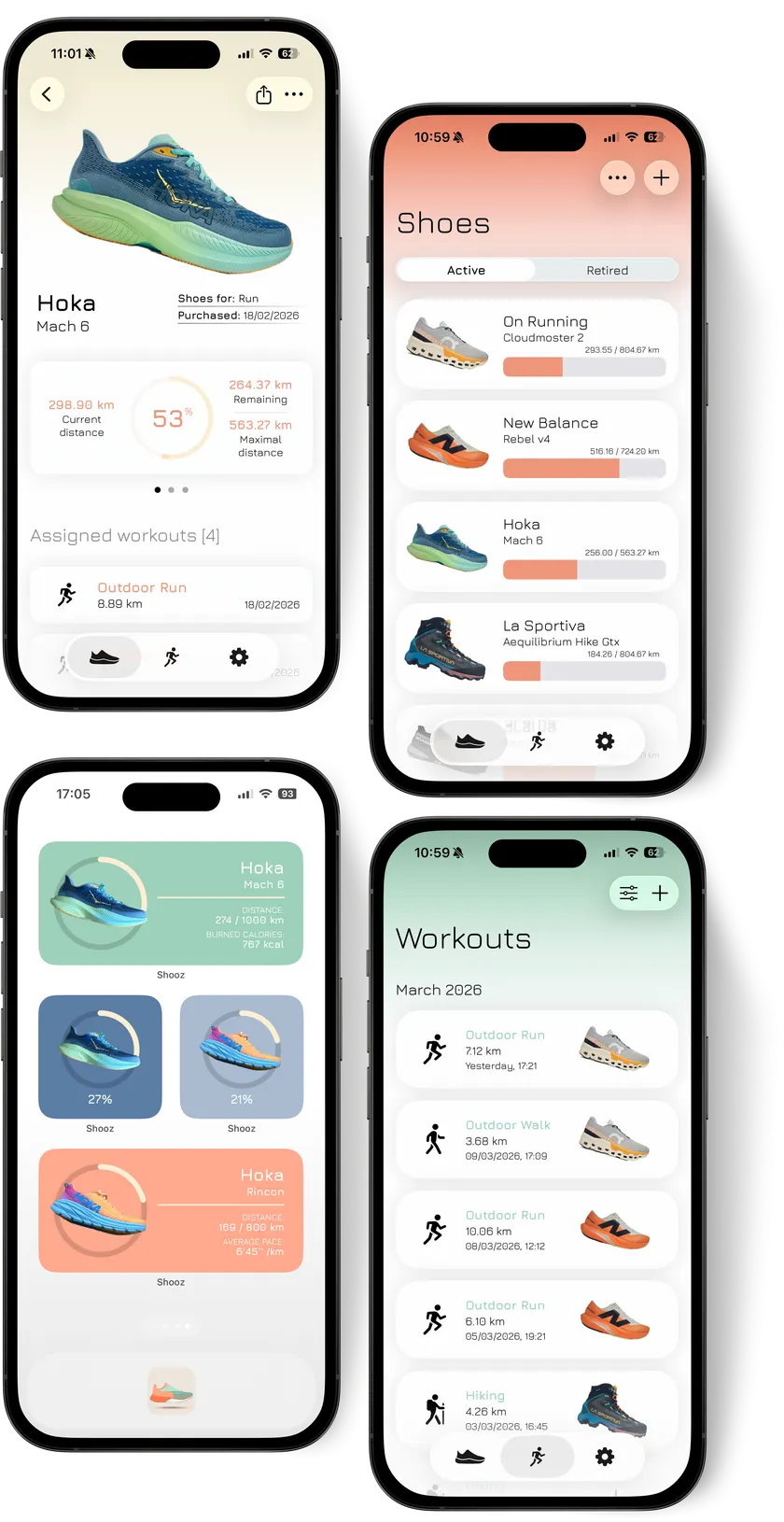
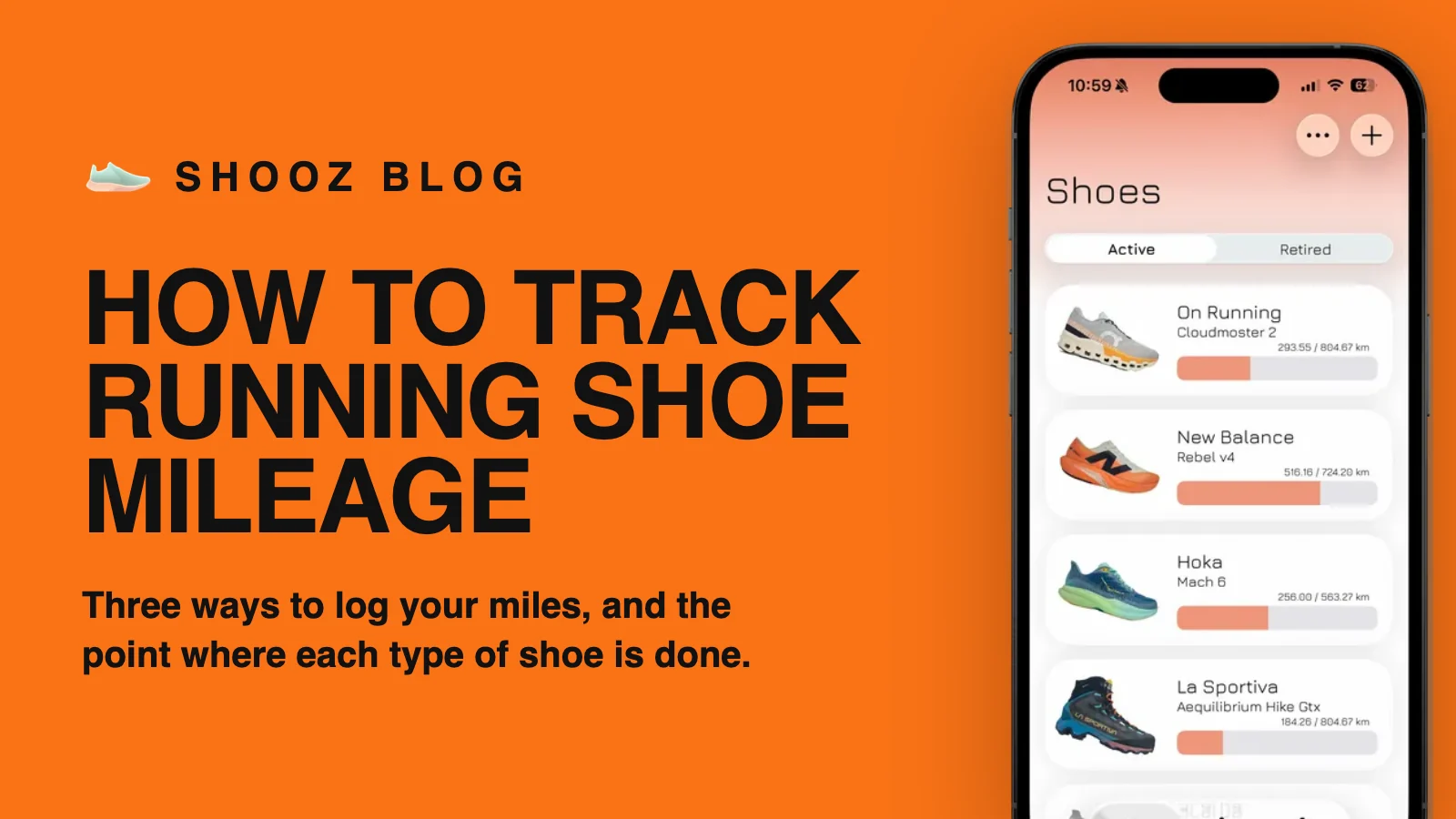
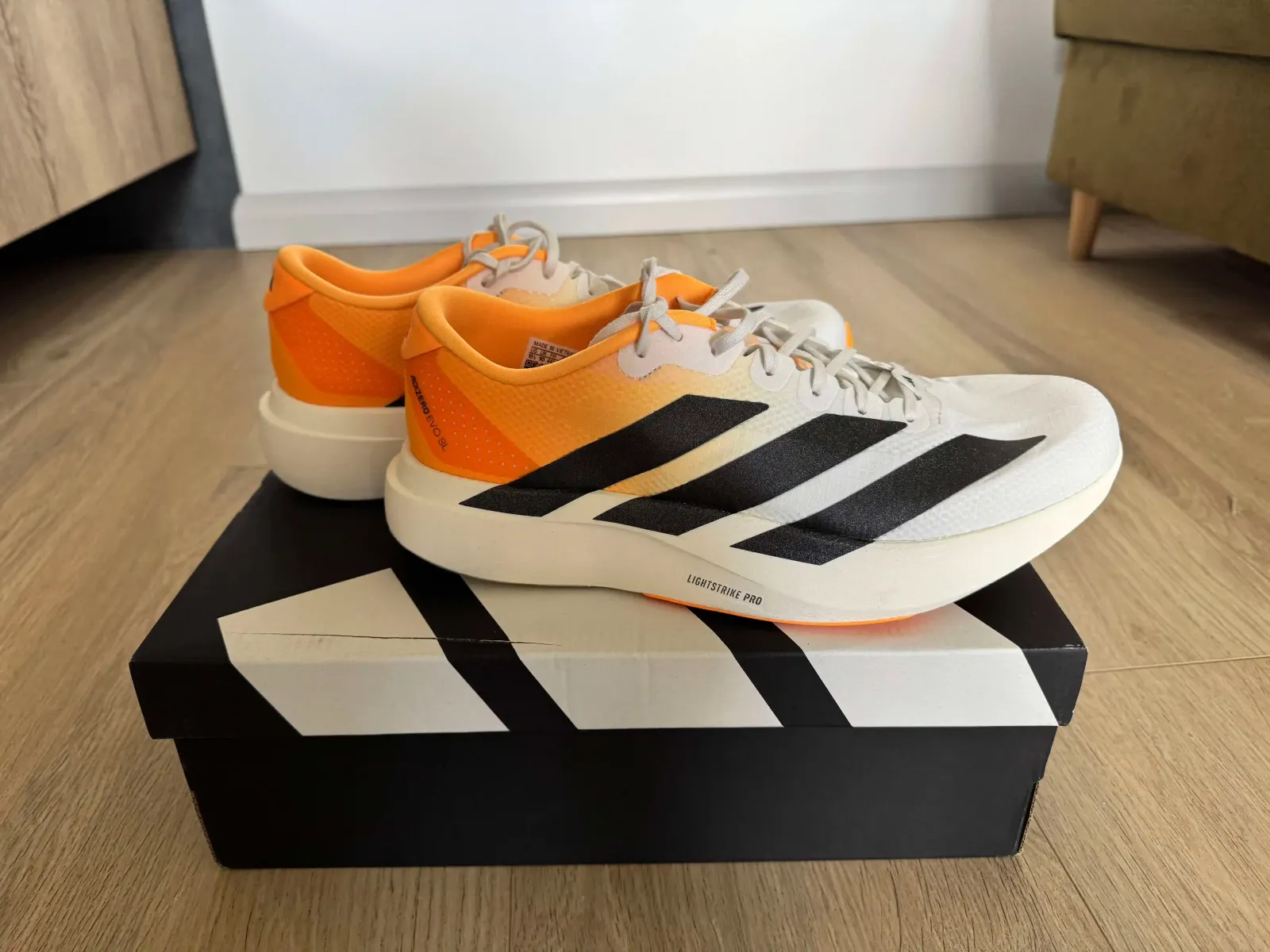
The hard part is knowing the mileage in the first place. Our guide on how to track running shoe mileage covers the options, from a spreadsheet to automatic tracking from Apple Health with SHOOZ. To get the range for your own pair, try the running shoe lifespan calculator. And to see a real pair measured against its expected lifespan, read our Adidas Adizero EVO SL Woven review.
Sources
- Cook SD, Kester MA, Brunet ME. Shock absorption characteristics of running shoes. The American Journal of Sports Medicine, 1985;13(4):248–253.
- Verdejo R, Mills NJ. Heel–shoe interactions and the durability of EVA foam running-shoe midsoles. Journal of Biomechanics, 2004;37(9):1379–1386.
- Kong PW, Candelaria NG, Smith DR. Running in new and worn shoes: a comparison of three types of cushioning footwear. British Journal of Sports Medicine, 2009;43(10):745–749.
- Rodrigo-Carranza V, Hoogkamer W, González-Ravé JM, et al. Influence of different midsole foam in advanced footwear technology use on running economy and biomechanics in trained runners. Scandinavian Journal of Medicine & Science in Sports, 2024;34(1):e14526.
- Malisoux L, Ramesh J, Mann R, Seil R, Urhausen A, Theisen D. Can parallel use of different running shoes decrease running-related injury risk? Scandinavian Journal of Medicine & Science in Sports, 2015;25(1):110–115.
The lifespan ranges and the weight and surface adjustments come from the SHOOZ running shoe lifespan calculator, not from the studies above.
SHOOZ · Running shoe tracker
Know exactly when to replace your running shoes
SHOOZ adds every run to the pair you wore and shows how much life it has left, so worn-out cushioning never catches you by surprise.
- + Mileage updates automatically from Apple Health
- + Remaining lifespan for every pair at a glance
- + Pace, time and stats for each shoe
- + Home Screen widgets and iCloud sync