
How Long Do Carbon Plated Shoes Last? (Miles + Races)
Carbon plated race shoes keep their edge for about 120–250 miles (200–400 km). See how many races that is, why the foam fades and when to retire them.
By Maciej KrólikowskiPublished 9 min read

Carbon plated shoes keep their race-day edge for about 120 to 250 miles (200 to 400 km). After that most pairs still run fine, but they are no longer the faster shoe you paid for. If you only race in them, that window is roughly 4 to 8 marathons or 7 to 16 half marathons.
A carbon plated shoe is a race shoe that pairs a stiff carbon plate with a light, springy foam. Runners often call it a super shoe. Search for how long one lasts and you will find numbers from 100 to 500 miles. Both ends can be true, because they answer different questions. One is how long the shoe stays fast. The other is how long it stays wearable.
This guide gives a range for each and turns the miles into races. It also explains what happens to worn super shoe foam, and how to tell when your pair is done for racing.
How many miles do carbon plated shoes last?
Plan on 120 to 250 miles (200 to 400 km) of racing life. That is the range our running shoe lifespan calculator uses for a carbon race shoe. For a daily trainer it uses 370 to 500 miles (600 to 800 km).
The catch is that there are two lifespans, and most articles mix them up:
| Lifespan | Typical range | What ends it |
|---|---|---|
| Racing life | 120–250 miles (200–400 km) | The foam loses the bounce that made the shoe faster |
| Running life | Often well past the racing life | The outsole wears through or the shoe stops feeling comfortable |
This is the planning range our calculator uses, not a lab result. Treat it as a starting point. Lighter runners and race-only pairs land at the top. Heavier runners and pairs that also do workouts land at the bottom.
How many races do carbon plated shoes last?
If the pair only comes out on race day, the table below shows how many races it covers. Each race also adds a warm-up and a cool-down, which we count as about 2 miles (3 km) in total.
| Race distance | Miles per race day | Races in 120–250 miles (200–400 km) |
|---|---|---|
| 5K | About 5 miles (8 km) | About 23–49 |
| 10K | About 8 miles (13 km) | About 14–30 |
| Half marathon | About 15 miles (24 km) | About 7–16 |
| Marathon | About 28 miles (45 km) | About 4–8 |
Our methodology is simple: divide the racing window by the miles of one race day, then round down to whole races. These are sums, not test results. They show why a 5K racer and a marathoner get such different value from the same pair. For example, a 10K runner who races once a month and only wears the pair on race day needs more than a year to reach even the low end. They also show how fast the window shrinks once the shoe starts doing more than races, which is the next question.
Why does a super shoe lose its edge before it looks worn?
Because what wears out is the foam inside, not the parts you can see. PEBA is a very light and springy foam that many super shoes use. A 2024 study in the Scandinavian Journal of Medicine & Science in Sports shows it fades faster than the older EVA foam.
Researchers at the University of Castilla-La Mancha tested 22 trained runners in two super shoes that differed in their midsole foam. Each shoe was tested new and again after 450 km (280 miles) of use:
- New, the PEBA shoe cost the runners about 1.8% less energy than the EVA shoe (14.87 vs 15.15 W/kg).
- After 450 km, the PEBA shoe cost about 2.3% more energy than when it was new (15.21 W/kg). The EVA shoe had not changed.
- At that point, the two shoes performed about the same. The PEBA advantage was gone.
For scale, look at a 2018 study of 18 high-level runners in Sports Medicine. Prototype carbon plated racing shoes lowered their energy cost of running by about 4% compared with established marathon racing shoes. The two studies measured different shoes, but a loss of about 2% is clearly not a rounding error.
The evidence is still thin, though. A 2024 study of 16 trained runners in the International Journal of Sports Physiology and Performance tested runners in their own super shoes. The shoes had been worn anywhere from 0 to 522 km. The shoe's mileage had no measurable effect on running economy. Both studies were small and used different shoes and designs, which may explain part of the gap. The honest summary: the foam does fade, but nobody can yet tell you the exact mile where your pair stops helping.
Does training in super shoes make them wear out faster?
Yes, in the simplest way: every workout mile comes out of the same 120 to 250 miles (200 to 400 km). For example, say your race shoe also does a weekly tempo run of 6 miles (10 km). It then uses up its racing window in roughly five to ten months, before you have raced in it much.
That is why it helps to split the jobs. A daily trainer takes the easy miles. A lighter shoe takes the workouts. The race pair waits for race day and maybe one or two key sessions before it.
My race pair is an Adidas Adizero Adios Pro 3, and I use it only for 5K, 10K and half marathon races. It has about 180 km (110 miles) on it and is still my race shoe. I made one mistake with it: I did not run in it before my first race, and I got a blister.
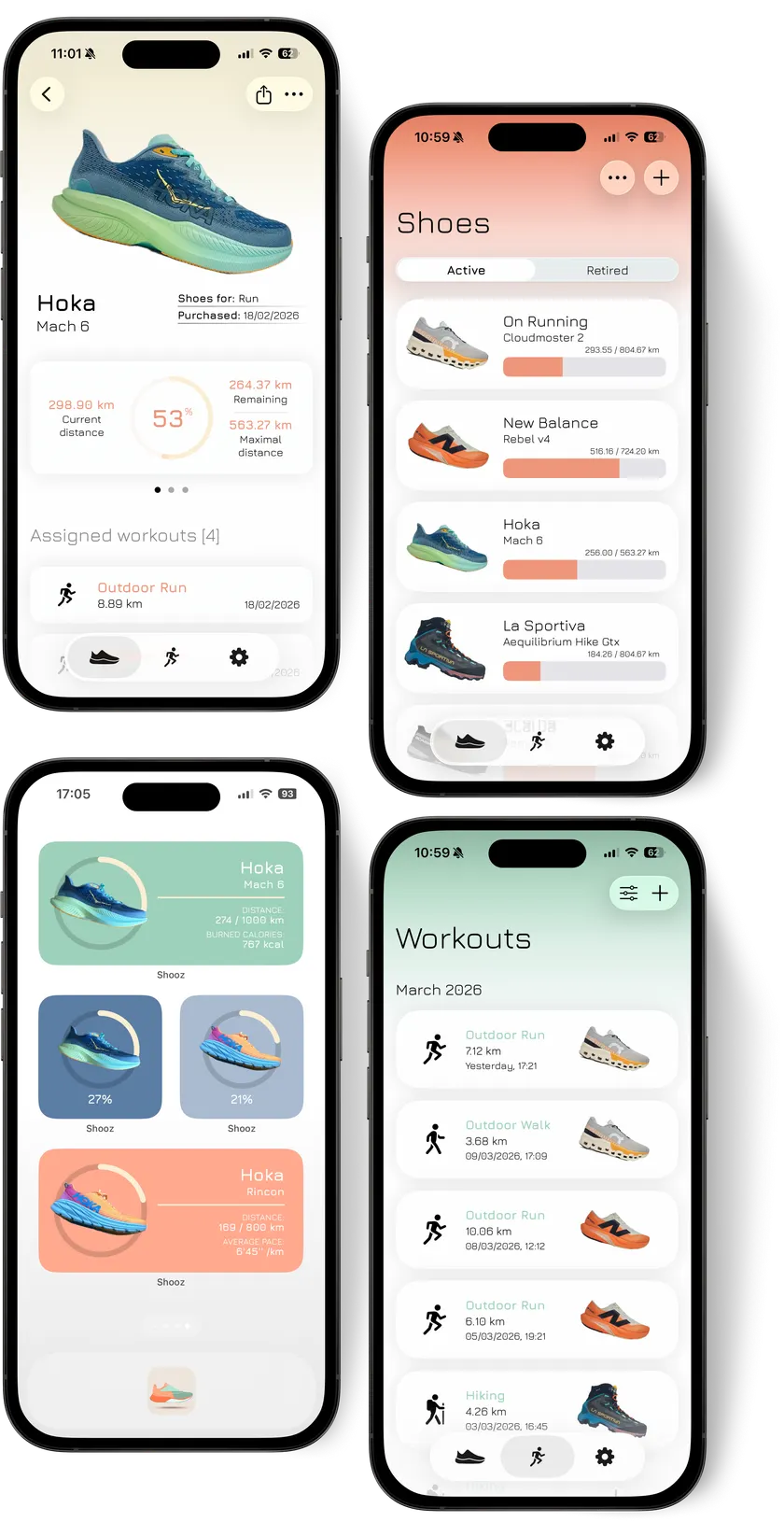
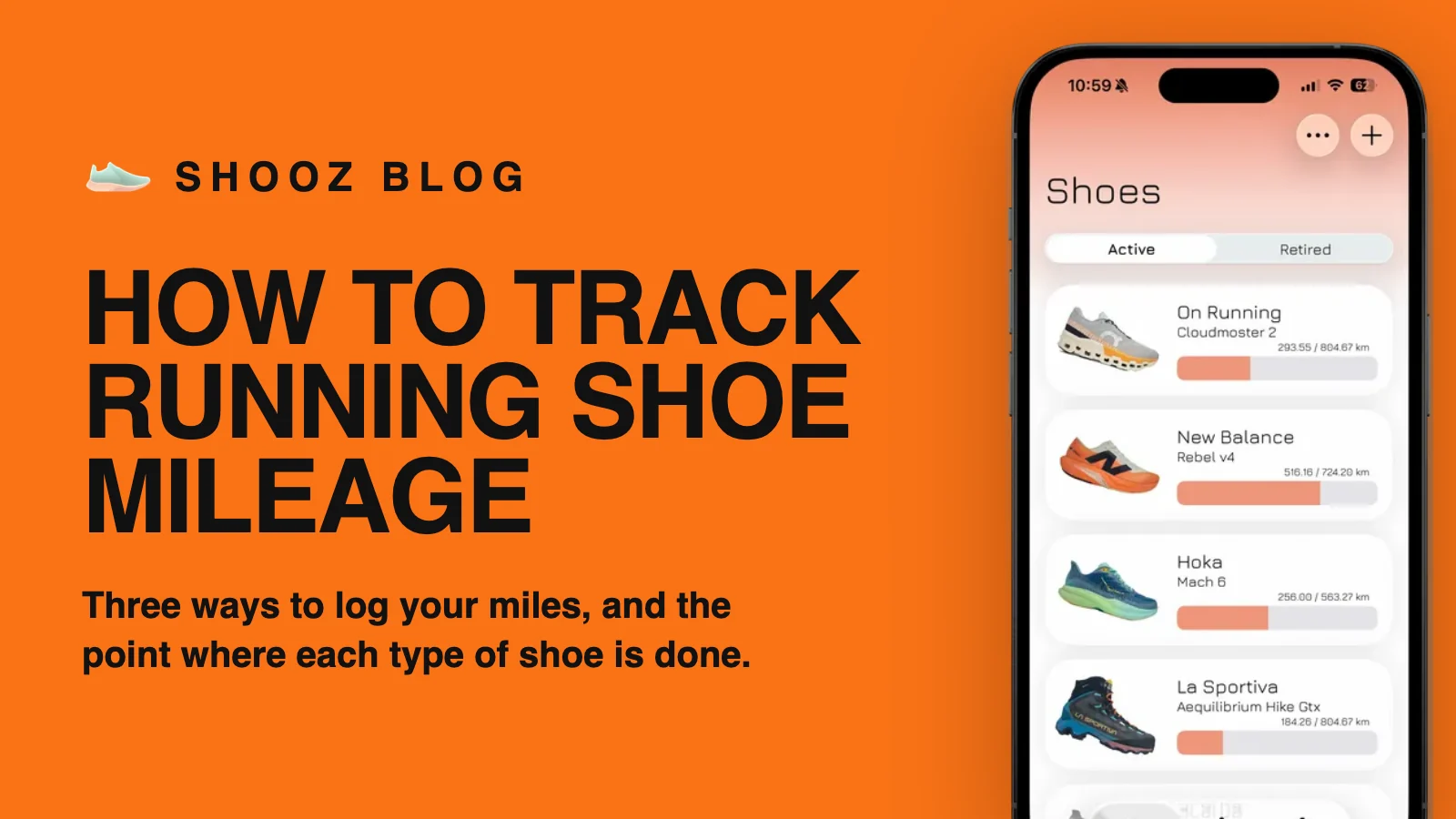
Track the race pair on its own, not as part of your total. Our guide on how to track mileage for each pair shows how to split mileage by pair, so you always know how much racing life is left.
How do you know when a carbon plated shoe has lost its pop?
Start with the mileage, because the shoe itself gives few clues. A worn race shoe can look almost new at the point where the foam is already flat. Once a pair passes 120 miles (200 km), use these checks:
- Compare it with a newer pair. Run the same short workout or strides in both, at the same effort. If the old pair feels flat and the pace takes more work, the racing life is over.
- Look at the midsole. Deep creases in the side of the foam, or foam that looks squashed under the ball of the foot, mean it has compressed.
- Check the outsole. Race shoes have thin rubber. Bare foam showing under the forefoot means grip and protection are going too. Our guide on how to read the wear on your outsole shows what normal wear looks like.
- Listen to your legs. If your calves feel heavier or your feet sorer than usual after a race, take note, especially of the last miles.
No single check is proof. Two or three together, past the lower end of the mileage window, are a clear sign.
What should you do with an old race shoe?
Keep running in it. A race shoe that has lost its edge for racing is often still a good workout or long run shoe, and later an easy-day shoe. Retire it fully when the outsole is worn through or the shoe stops feeling comfortable, the same way you would retire any running shoe.
Buy the replacement before the old pair is completely done. Then you have time to run in the new one and still compare the two. Do not save a new race pair for race day without trying it first.
One warning if you are new to plated shoes. They change how the load reaches your feet and calves, and jumping straight into lots of miles in them is a common mistake.
I once bought carbon plated shoes and started running in them before my body was ready. I was not doing strength training, and I picked up an injury. Since then I do strength work regularly.
Build up your time in a new plated shoe slowly. This guide is not medical advice. If you have pain that does not go away, see a physiotherapist or sports doctor.
Frequently asked questions
Are carbon plated shoes worth it if they last so few miles?
It depends on what a race is worth to you. Measured in cost per mile, a race shoe is expensive. Measured in cost per race, a race-only pair gives 4 to 8 marathons or 7 to 16 half marathons at full strength, which many runners find fair.
Does the carbon plate break?
We found no good data on how often plates crack, so watch the foam instead. The 2024 foam study compared two super shoes with different foams, and only the PEBA shoe changed with wear. That points to the foam as the part that fades.
Do carbon plated shoes last fewer km than normal running shoes?
Yes, for racing. A carbon race shoe gives about 200 to 400 km (120 to 250 miles) of racing life. A daily trainer gives roughly 600 to 800 km (370 to 500 miles). See how long other types of running shoes last for every shoe type.
Should I count races or miles?
Miles, because a race number hides the warm-ups, strides and workouts the shoe also did. Convert to races only when you plan your season.
So when should you replace carbon plated shoes?
Retire a carbon plated shoe from racing somewhere between 120 and 250 miles (200 to 400 km). Use the low end if it also does workouts or you are a heavier runner. Use the high end if it only comes out on race day.
- Track the race pair separately, so its miles do not hide in your total.
- From 120 miles (200 km), compare it with a newer pair before each big race.
- Move a retired race shoe to workouts or long runs, not to the bin.
To get the expected window for your own weight and surface, run your numbers through the running shoe lifespan calculator.
Sources
- Rodrigo-Carranza V, Hoogkamer W, González-Ravé JM, et al. Influence of different midsole foam in advanced footwear technology use on running economy and biomechanics in trained runners. Scandinavian Journal of Medicine & Science in Sports, 2024;34(1):e14526.
- Hoogkamer W, Kipp S, Frank JH, et al. A comparison of the energetic cost of running in marathon racing shoes. Sports Medicine, 2018;48(4):1009–1019.
- Schwalm LC, Fohrmann D, Schaffarczyk M, et al. Habituation does not change running economy in advanced footwear technology. International Journal of Sports Physiology and Performance, 2024;19(11):1285–1290.
The lifespan ranges in this guide are the planning ranges the SHOOZ running shoe lifespan calculator uses, not results from the sources above.
SHOOZ · Running shoe tracker
Know exactly when to replace your running shoes
SHOOZ adds every run to the pair you wore and shows how much life it has left, so worn-out cushioning never catches you by surprise.
- + Mileage updates automatically from Apple Health
- + Remaining lifespan for every pair at a glance
- + Pace, time and stats for each shoe
- + Home Screen widgets and iCloud sync