
Running Shoe Wear Pattern: What 6 Patterns Mean
What your running shoe wear pattern means: outer heel, inner edge, forefoot and one-sided wear, what is normal, and when to replace the pair.
By Olga KrólikowskaPublished 10 min read
The most common running shoe wear pattern is worn rubber at the back outer corner of the heel and under the ball of the foot. For most runners, that is completely normal. It shows where your foot lands and where it pushes off, and not much more.
A worn inner edge does not prove you overpronate, and a worn outer edge does not mean you need a different kind of shoe. The best direct study, in 76 infantry recruits, found no clear link between heel wear and foot motion.
What the outsole can tell you reliably is how far gone the shoe is. This guide covers the six patterns runners ask about most, what each one usually means, and when worn rubber means it is time for a new pair.
What does a normal running shoe wear pattern look like?
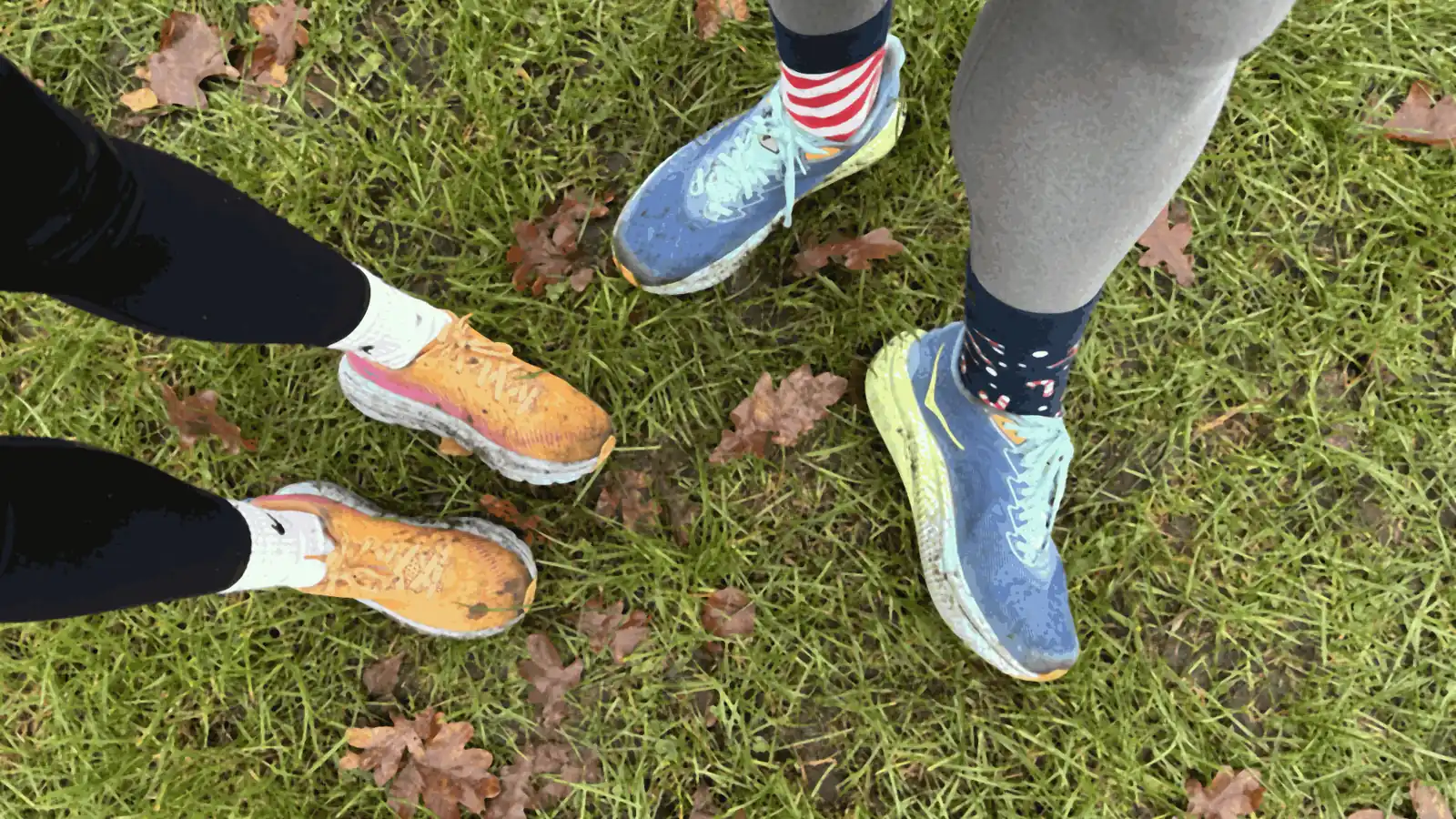
A normal pattern is worn rubber at the back outer corner of the heel, plus wear under the ball of the foot. Both shoes look roughly alike.
The heel wear comes from how most people land. When researchers filmed 936 runners at the 10 km (6.2 mile) mark of a road race, 88.9% landed on the heel first (Journal of Sports Sciences, 2011). Only 3.4% landed on the midfoot and 1.8% on the forefoot.
The back outer corner is where heels wear first, even in boots. A study of 76 infantry recruits measured heel wear after 14 weeks of training (Journal of Foot and Ankle Research, 2012). In most boots, the worn area sat at the back outer edge of the heel. Those were military boots, not running shoes, but the direction matches what runners see.
Physical therapist Matt Klein, in his review of outsole wear patterns for Doctors of Running, treats this back outer heel wear in heel strikers as normal. He treats wear across the middle of the forefoot as normal too. If you land on your midfoot or forefoot, expect less heel wear and more under the ball of the foot.
What does each wear pattern mean?
The table covers the six patterns runners ask about most. The readings in the middle column are the usual clinical interpretations, mostly from Klein's review. He describes his own observations as anecdotal, so treat them as expert opinion, not tested findings.
| Where the shoe is worn | What it usually means | Worth acting on? |
|---|---|---|
| Back outer corner of the heel | You land on your heel, like most runners | No, this is the normal pattern |
| Middle of the forefoot | You push off evenly; midfoot and forefoot strikers wear here most | No |
| Outer edge of the heel and forefoot | Your foot stays on its outside edge, often called supination | Only if the shoe tilts outward or you have pain |
| Inner edge of the heel | The heel may roll inward early after landing; this pattern is uncommon | Only if the shoe tilts inward or you have pain |
| Under the big toe and inner forefoot | You push off through the inside of the forefoot | Only together with pain |
| One shoe much more than the other | A left-right difference, a cambered road or laps in one direction | Look for a simple cause first |
Outer heel. This is the pattern people worry about most, and it matters least. It is the normal heel-strike pattern from the section above.
Outer edge. Wear along the outer heel and the outer forefoot is often read as supination, where the foot stays rolled outward. Klein notes that outer forefoot wear is common, though, and in forefoot strikers it can simply be where the foot lands.
Inner heel. Wear on the inside of the heel is uncommon in Klein's experience. He reads it as a possible sign of early overpronation, where the foot rolls inward soon after landing. Check whether the shoe leans inward when it stands on a table.
Big toe area. Klein links heavy wear under the big toe to the foot rolling inward at push-off. On its own, that is not a reason to change shoes. Heavy wear here together with pain is something to show a physiotherapist.
Middle of the forefoot and one-sided wear are covered above and in the section on why one shoe wears out faster.
Can your wear pattern tell you if you overpronate?
Not reliably. The best direct evidence found no clear link between where a shoe wears and how the foot moves.
In the infantry study, the researchers measured each recruit's hindfoot motion and arch height before training. Heel wear could not be related to subtalar joint motion, the joint below the ankle that controls inward and outward roll. Arch measurements were not linked to the wear pattern either. The authors concluded that the findings do not justify trying to change foot motion to reduce heel wear.
Klein makes the same point from the clinical side in his review: no single wear pattern maps to a single problem. He adds that surface, road camber and other factors all change where a shoe wears.
Even if your feet are pronated, it may matter less than the internet suggests. A one-year study of 927 novice runners gave everyone the same neutral shoe (British Journal of Sports Medicine, 2014). Runners with pronated feet did not have a higher injury risk than runners with neutral feet. The authors added that very pronated feet were too few in their sample to judge.
Should the wear pattern decide between stability and neutral shoes?
No. The wear pattern is a weak guide, and choosing shoes by foot shape has not been shown to prevent injuries.
The U.S. Army tested this directly. Recruits got motion control, stability or cushioned shoes based on the shape of their foot, while a control group all got stability shoes. Injury risk was almost the same in both groups, with a risk ratio of 1.01 for men and 1.07 for women (Journal of Strength and Conditioning Research, 2009). The authors concluded the selection method was not necessary for injury prevention.
A practical approach is simpler. Try the shoe on a run, and pick the one that feels stable and comfortable at your usual pace. If the old pair suited you, the same model is a sensible starting point, whatever its outsole looks like.
Why does one shoe wear out faster than the other?
Usually something simple: a cambered road, laps in one direction, or a small left-right difference in your stride. In the race study above, 5.9% of runners struck the ground differently with the left and right foot.
Klein points to two outside causes in his review:
- Road camber. Roads slope toward the edge for drainage. If you always run on the same side, one foot works on a slightly different slope from the other.
- Track direction. Running laps the same way round loads the inside and outside leg differently.
Change sides of the road or run some laps in the other direction, and see whether the next pair wears more evenly. If one shoe still wears much faster and you also have pain on that side, show it to a physiotherapist.
When does outsole wear mean it is time to replace your shoes?
Replace the pair when the rubber is worn through to the foam where you land or push off. Replace it too when the shoe tilts to one side on a flat table. Klein notes that a heel worn down on one side acts like a small wedge and changes how your foot lands.
The outsole is often not the first thing to go, though. The midsole foam can lose much of its cushioning while the rubber still looks usable. Researchers who followed midsoles made of EVA, the standard midsole foam, through real running found that peak pressure under the foot roughly doubled after 500 km (about 310 miles) (Journal of Biomechanics, 2004). That is why the outsole alone is a late signal.
My Asics Gel-Nimbus 25 lasted about 465 miles (750 km). I replaced them when the rubber under the front of my foot had worn right down to the foam. But that is rarely the first sign for me. Usually I notice the foam feels harder, and small wrinkles appear on the side of the midsole.
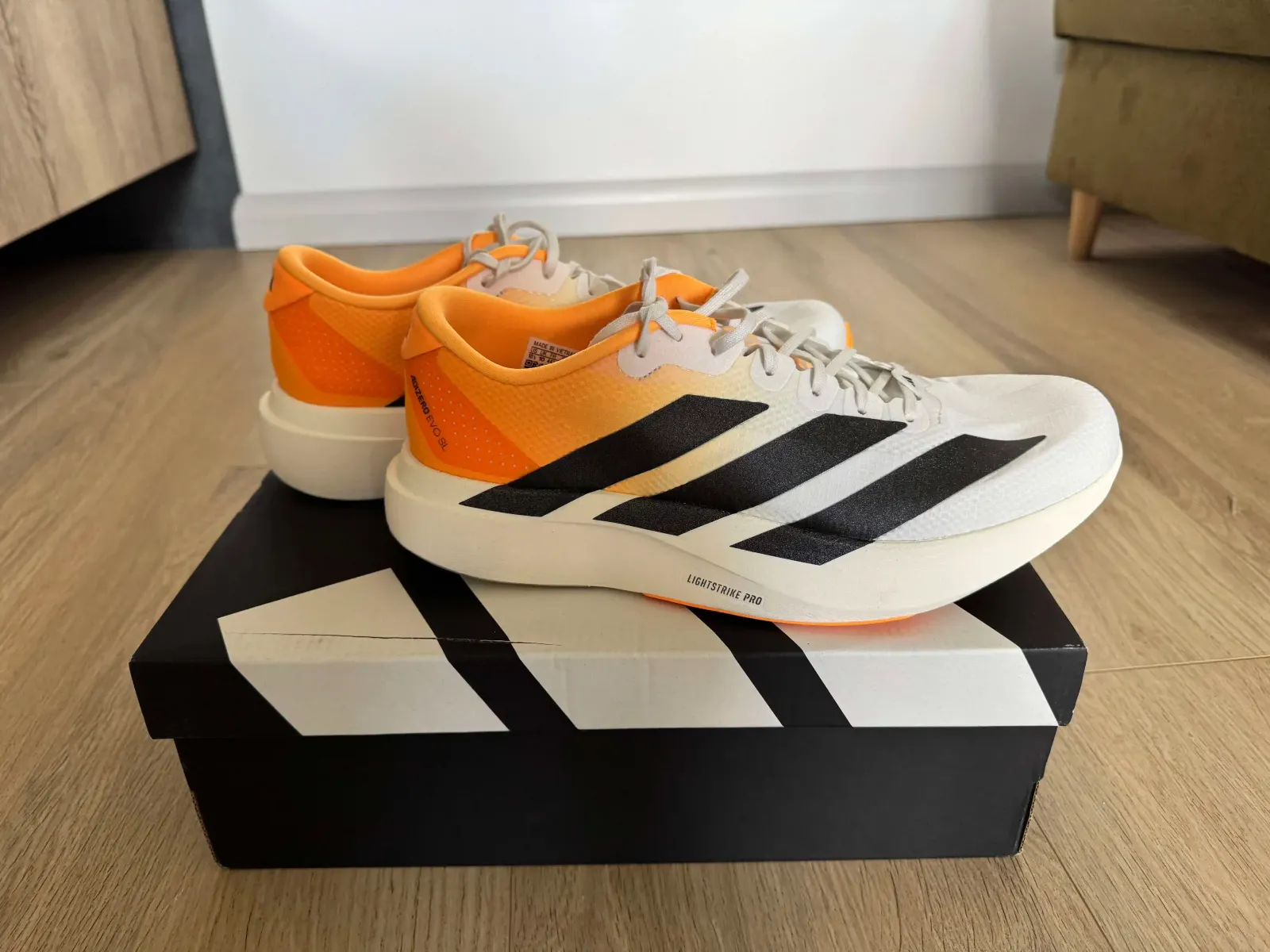
Most running shoes last 300 to 500 miles (500 to 800 km), depending on the type of shoe, your weight and your surface. Our guide on how many miles running shoes last gives the ranges for each shoe type and the other signs that a pair is done. For a written outsole check after 100 miles (160 km), see our Adidas Adizero EVO SL Woven review.
How to check your own wear pattern
A wear pattern means something only if you read it under the right conditions:
- Use a pair you only run in. Walking wears the heel differently, so a shoe that also does errands blurs the picture.
- Give the shoe some miles. We suggest waiting until about 100 miles (160 km), so the pattern has time to show.
- Put both shoes on a flat table, side by side. Look at the soles first, then look at the heels from behind. Note whether either shoe leans to one side.
- Compare with your older pairs. One pair can mislead you. The same pattern on two or three pairs is more likely a habit of your stride or your usual route.
- Note the mileage. A bald heel at 150 miles (240 km) means something different from the same heel at 450 miles (725 km).
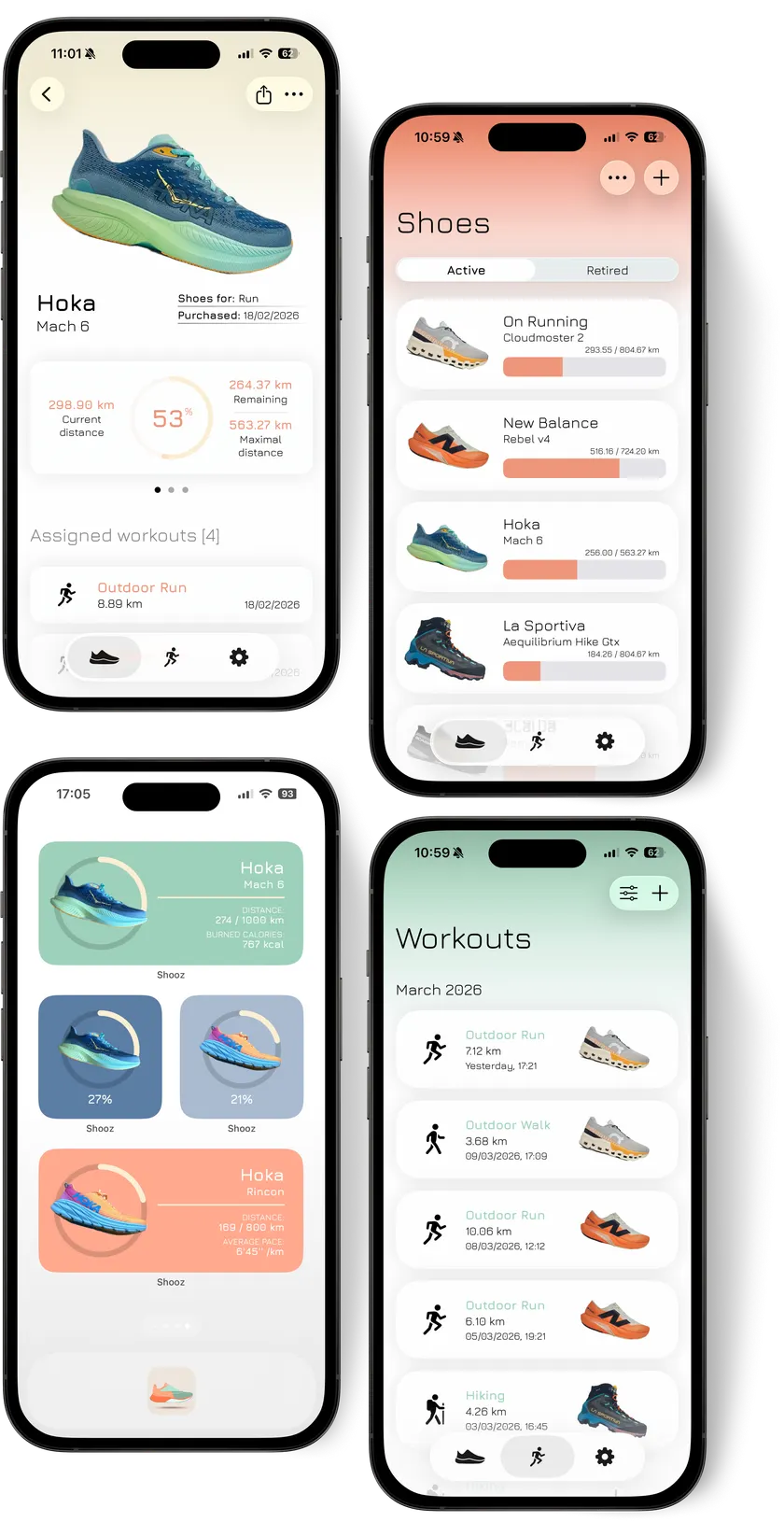
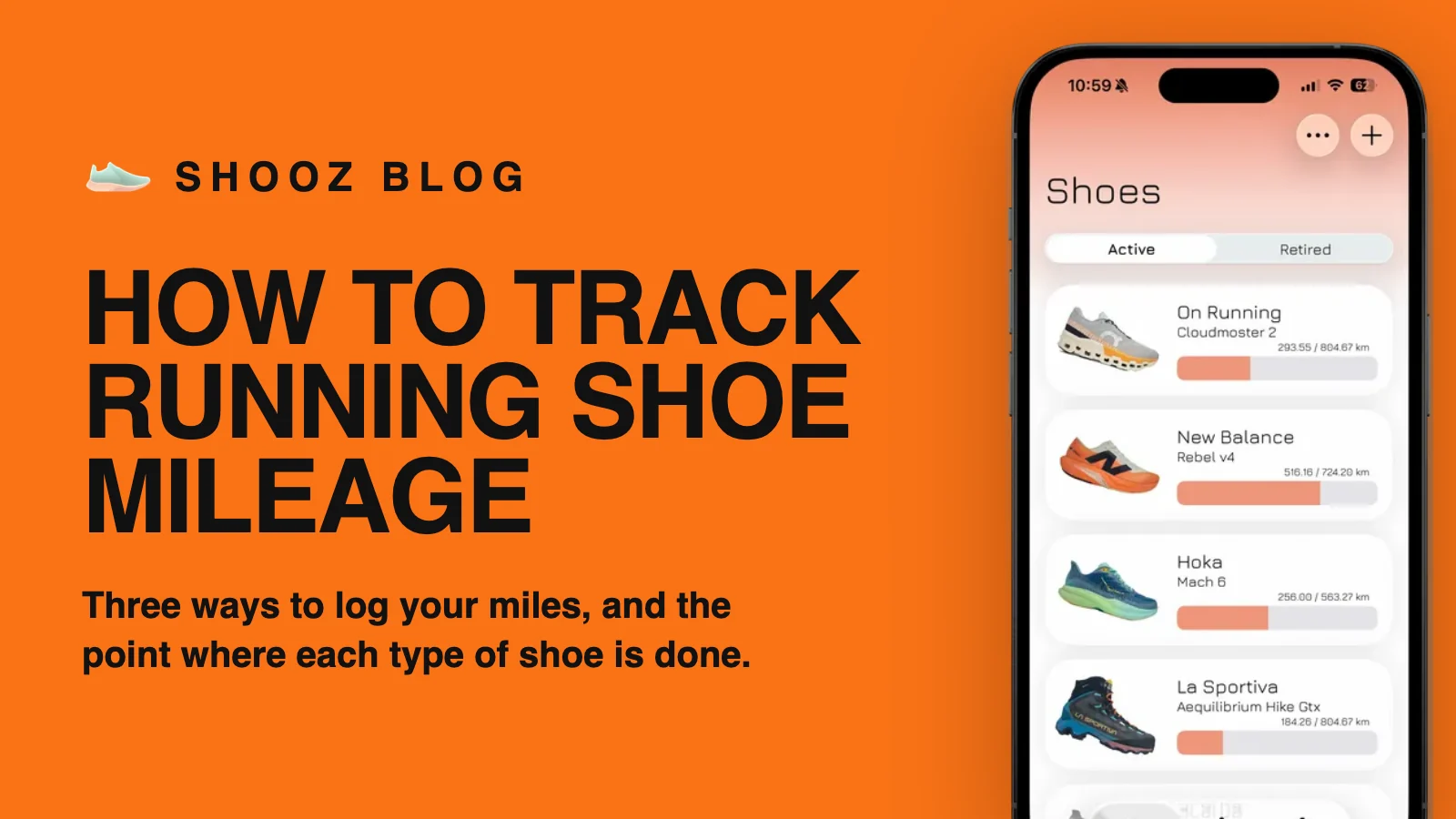
The last step is hard if you do not know when you bought the pair. Our guide on how to track the mileage of each pair covers the options, from a spreadsheet to SHOOZ, our app that adds every run from Apple Health automatically.
Frequently asked questions
Is it normal to wear out the outside of running shoes?
Yes, at the back of the heel. Most runners land on the heel, and the infantry study found heel wear concentrated at the back outer edge. Wear along the whole outer edge to the toe is not, on its own, a reason to change shoes.
Do I need orthotics or stability shoes because of my wear pattern?
Not because of the wear pattern alone. The evidence that wear reflects foot motion is weak, and choosing shoes by foot shape did not lower injury risk in the Army study. If you have pain that keeps coming back, see a physiotherapist or sports doctor.
Does rotating shoes stop uneven wear?
No. Rotating two pairs spreads your miles, so each pair lasts more months, but not more miles, and each one still wears in your pattern. What can change the pattern is varying your side of the road or your lap direction.
So what should you do with your wear pattern?
Look at it, but do not let it diagnose you. Back outer heel and ball-of-foot wear is the normal pattern. Unusual wear is a hint to watch, not proof that something is wrong with your feet or your shoes.
The question the outsole answers best is how close the pair is to the end. To get the expected lifespan for your own pair, try the running shoe lifespan calculator. Then check the pattern again once the shoe reaches the lower end of that range.
This guide is not medical advice. If you have pain that does not go away, see a physiotherapist or sports doctor.
Sources
- Larson P, Higgins E, Kaminski J, et al. Foot strike patterns of recreational and sub-elite runners in a long-distance road race. Journal of Sports Sciences, 2011;29(15):1665–1673.
- Finestone AS, Petrov K, Agar G, Honig A, Tamir E, Milgrom C. Pattern of outsole shoe heel wear in infantry recruits. Journal of Foot and Ankle Research, 2012;5:27.
- Nielsen RO, Buist I, Parner ET, et al. Foot pronation is not associated with increased injury risk in novice runners wearing a neutral shoe: a 1-year prospective cohort study. British Journal of Sports Medicine, 2014;48(6).
- Knapik JJ, Swedler DI, Grier TL, et al. Injury reduction effectiveness of selecting running shoes based on plantar shape. Journal of Strength and Conditioning Research, 2009;23(3):685–697.
- Verdejo R, Mills NJ. Heel–shoe interactions and the durability of EVA foam running-shoe midsoles. Journal of Biomechanics, 2004;37(9):1379–1386.
- Klein M. Footwear science: outsole wear patterns. Doctors of Running, 2017.
SHOOZ · Running shoe tracker
Know exactly when to replace your running shoes
SHOOZ adds every run to the pair you wore and shows how much life it has left, so worn-out cushioning never catches you by surprise.
- + Mileage updates automatically from Apple Health
- + Remaining lifespan for every pair at a glance
- + Pace, time and stats for each shoe
- + Home Screen widgets and iCloud sync